

MOTION-PRESERVING. PAIN-RELIEVING. LIFE-RESTORING.
Thumb CMC Arthritis & Joint Replacement
Advanced, motion-preserving treatment for arthritis at the base of the thumb.
FDA-approved motion-preserving thumb CMC replacement designed to relieve pain while maintaining natural thumb movement.
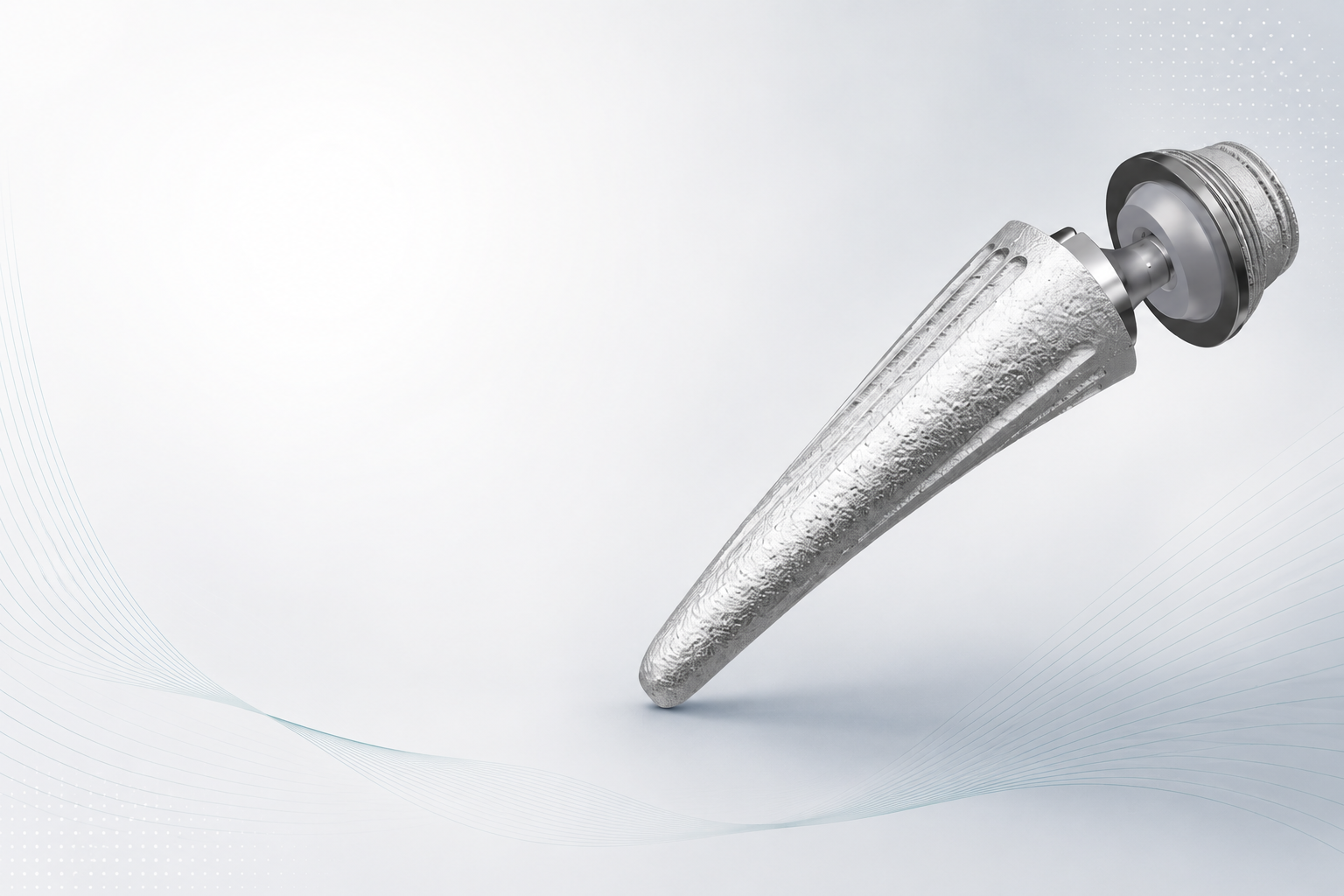
Specialized thumb arthritis care using advanced implant technology and motion-preserving techniques.
Offering advanced motion-preserving thumb arthritis treatment with the FDA-approved TOUCH® thumb CMC replacement.
Peter Gibson, MD offers TOUCH® thumb CMC joint replacement in Flagstaff for selected patients from across Arizona and surrounding areas.
A MODERN OPTION FOR THE RIGHT PATIENT
What is Thumb CMC Arthritis?
The carpometacarpal (CMC) joint is the base of the thumb where the metacarpal bone (thumb bone) meets the trapezium bone (wrist bone). Arthritis in this joint can cause pain, weakness, and decreased function.
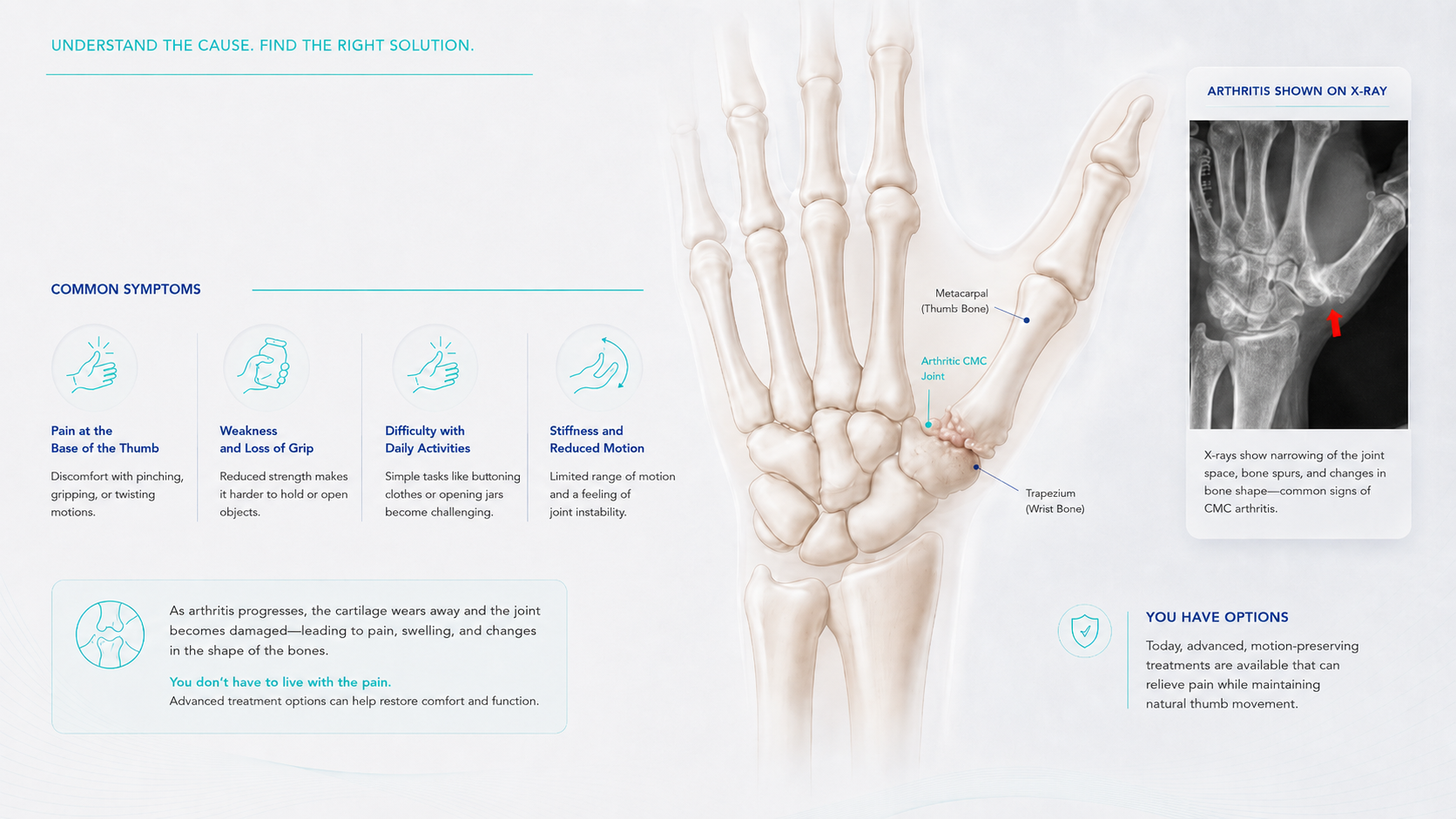
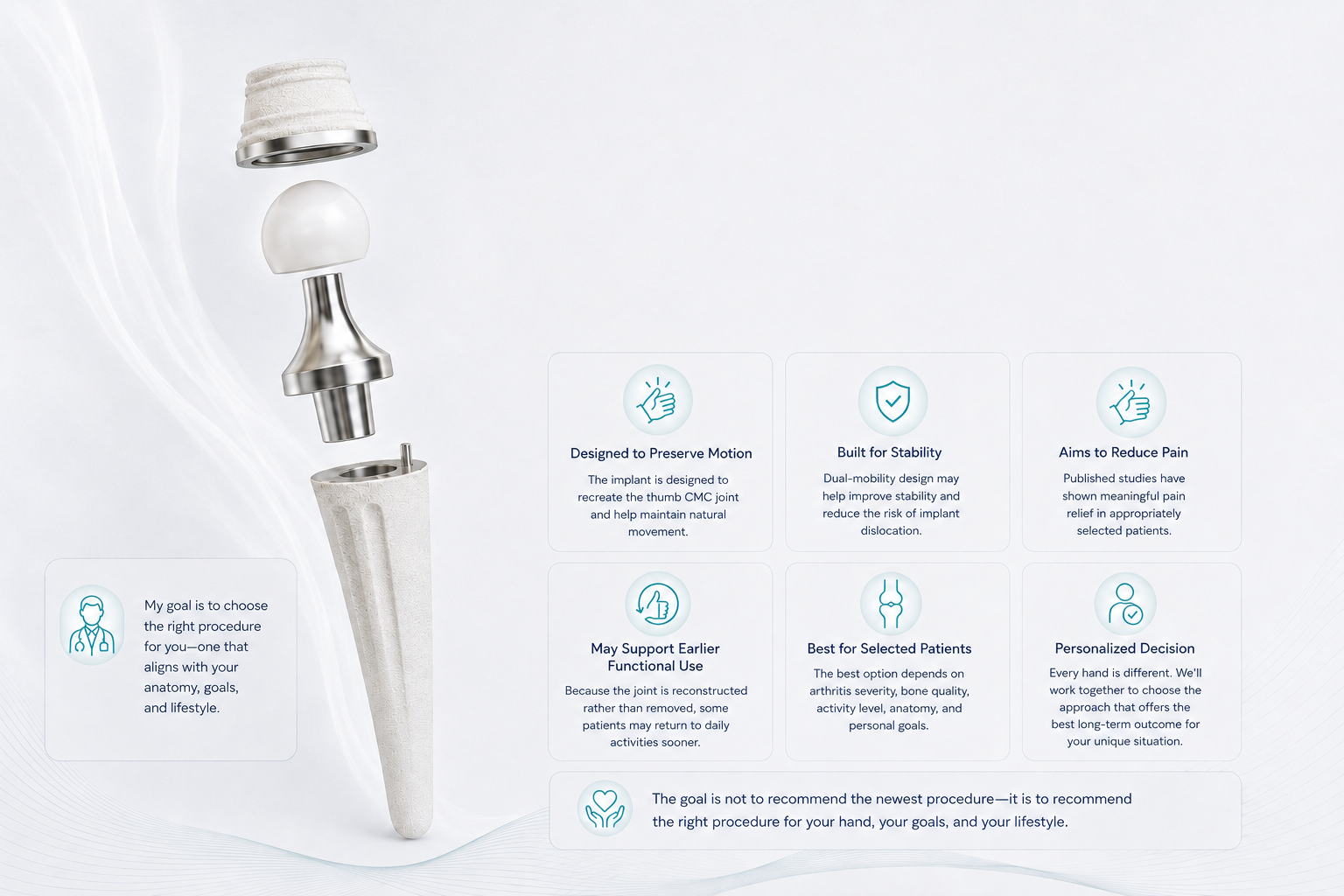
For carefully selected patients with arthritis at the base of the thumb, it may help relieve pain while preserving motion, strength, stability, and everyday hand function.
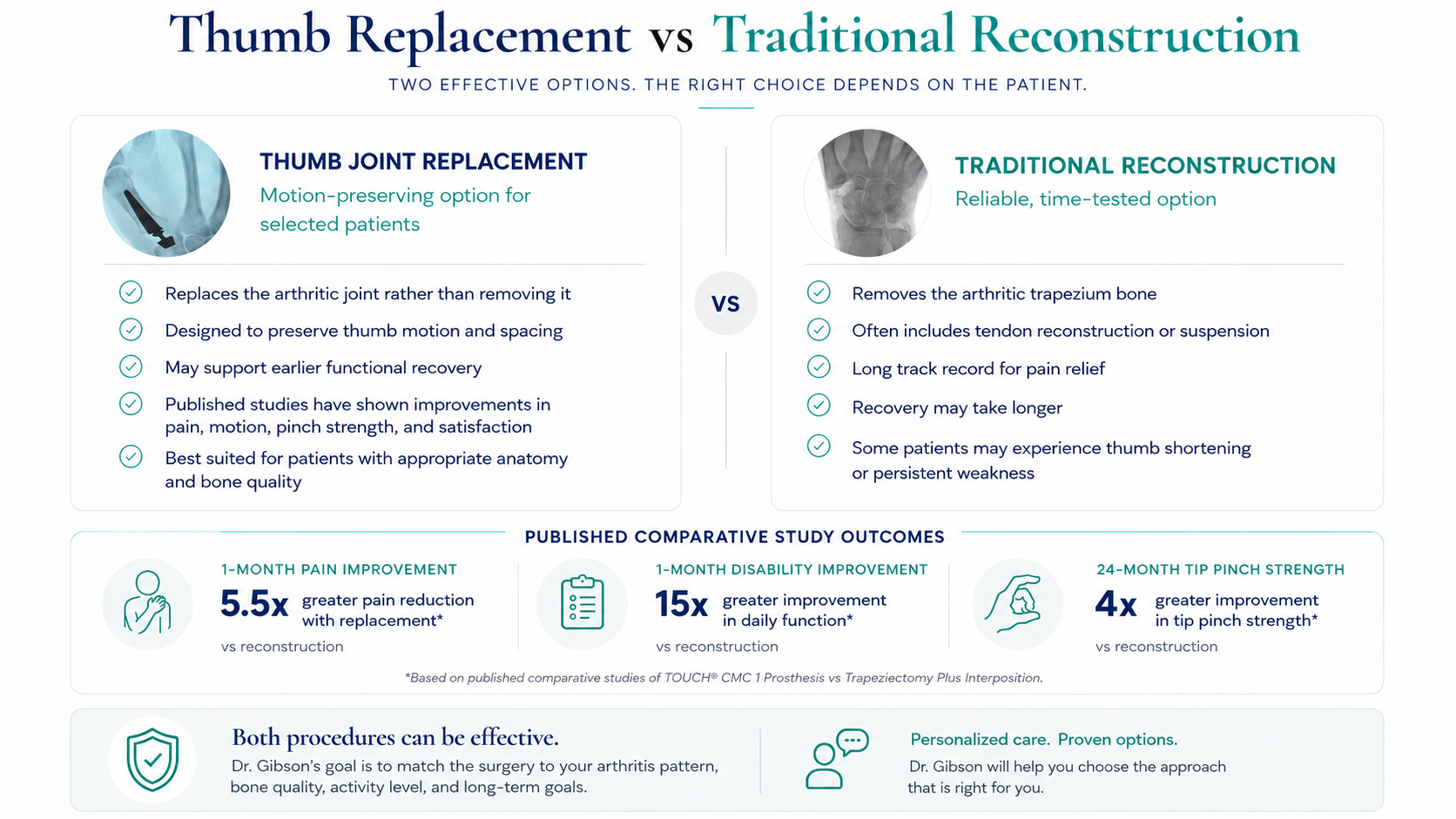
Dr. Gibson will review your symptoms, x-rays, thumb anatomy, activity goals, and treatment options to determine whether thumb joint replacement or traditional reconstruction is the better choice for your hand.
Is Thumb Joint Replacement Right for You?
Traveling for Thumb Arthritis Care?
Dr. Gibson welcomes patients from Phoenix, Scottsdale, Northern Arizona, southern Utah, and throughout the Southwest seeking specialized treatment for thumb CMC arthritis. Evaluations are available in Flagstaff and Sedona, with surgery performed in Flagstaff. Contact the office to discuss scheduling, prior imaging, insurance authorization, and whether TOUCH® thumb joint replacement or another treatment option may be appropriate.

Am I a Candidate for Thumb Joint Replacement?
Take a look at the Frequently Asked Questions or schedule a Consultation today.
-
For many patients, treatment for thumb CMC arthritis begins with nonsurgical options such as activity modification, anti-inflammatory medications when appropriate, bracing, hand therapy, and corticosteroid injections. Surgery is usually considered when pain at the base of the thumb continues to interfere with daily life, grip, pinch, work, hobbies, or overall hand function despite these treatments.
-
Surgery may be considered when thumb arthritis pain continues despite nonsurgical treatment and begins to limit daily activities such as opening jars, turning keys, lifting objects, writing, cooking, work, or hobbies. The decision is based on your symptoms, x-rays, thumb stability, hand function, activity goals, and how much the arthritis is affecting your quality of life.
-
Thumb joint replacement may be an option for patients with osteoarthritis at the base of the thumb that continues to affect daily life despite nonsurgical treatment such as bracing, activity modification, therapy, medications, or injections. It may be especially helpful for patients who want to improve pain, preserve thumb motion, and return to daily activities, hobbies, work, and an active lifestyle.
Not everyone is a candidate, but for the right patient, thumb replacement can be a very encouraging option. Dr. Gibson will evaluate your x-rays, thumb anatomy, bone quality, activity goals, and overall hand function to determine whether this approach fits your needs.
-
Thumb joint replacement is not the best choice for every patient. Patients may be better suited for traditional reconstruction or another treatment if they have arthritis in nearby wrist joints, such as the STT joint; inflammatory arthritis such as rheumatoid arthritis or lupus; significant bone loss or deformity around the thumb joint; active infection; complex regional pain syndrome; or very high-demand manual labor needs.
This does not mean there are no good options. It simply means Dr. Gibson will carefully review your x-rays, arthritis pattern, thumb anatomy, activity level, and goals to recommend the safest and most reliable treatment for your hand.
-
Thumb replacement replaces the worn joint surfaces at the base of the thumb with an implant designed to preserve thumb motion, spacing, and stability. Traditional trapeziectomy removes the arthritic trapezium bone and often uses tendon reconstruction or suspension to support the thumb.
Both procedures can reduce pain and improve function. The main difference is that thumb replacement aims to restore the joint, while trapeziectomy reconstructs the area after removing the arthritic bone.
-
The right surgery depends on your arthritis pattern, x-rays, thumb stability, anatomy, activity level, work demands, hobbies, and goals. Some patients are better candidates for thumb joint replacement, while others may do better with traditional reconstruction.
The best way to decide is through an individualized evaluation. An in-person visit allows Dr. Gibson to examine your thumb, review x-rays, and discuss treatment options. For patients traveling from outside the area, a telemedicine information session may also be helpful as a first step to learn whether thumb replacement may be worth exploring further.
Dr. Gibson’s goal is not to recommend the newest procedure for everyone. The goal is to choose the option that gives your hand the best chance for reliable pain relief, improved function, and a durable return to the activities that matter to you.
-
The best first step is to have your thumb evaluated and confirm the source of your pain. Thumb CMC arthritis can often be diagnosed with a focused examination and x-rays. Treatment is then based on your symptoms, arthritis pattern, daily limitations, activity goals, and treatments you have already tried.
An in-person visit allows Dr. Gibson to examine your thumb, review your x-rays, and discuss whether continued nonsurgical care, traditional reconstruction, or thumb joint replacement may be appropriate.
-
Yes. An in-person appointment is the best way to examine your thumb, review x-rays, and build a personalized treatment plan. During the visit, Dr. Gibson can discuss nonsurgical options, thumb joint replacement, traditional reconstruction, and which approach may best help restore function and decrease pain.
For patients traveling from outside Northern Arizona, a telemedicine information session may also be helpful as a first step. The goal is to help you understand your options and move toward a more comfortable, functional thumb.
-
The Touch® CMC thumb replacement implant is FDA approved and is used to treat arthritis at the base of the thumb in appropriate patients. Dr. Gibson accepts most major insurance plans, including Medicare, VA, Medicaid, and many commercial insurance plans.
Coverage can vary by insurance plan, so our team will help confirm your benefits, authorization requirements, and expected coverage before surgery. If thumb joint replacement is not the best option for your hand or your insurance situation, Dr. Gibson will discuss other nonsurgical and surgical treatment options, including traditional reconstruction.