


GENERAL HAND, WRIST, AND ELBOW CARE
──────
Hand & Wrist Conditions
──────
Clear information about common problems treated, symptoms, and when to seek care.

Our goal is to help you quickly find the condition or symptom that best matches your concerns. Select a topic below to learn more about common causes, symptoms, and available treatment options.
─────────────────────

Numbness & Tingling
Tingling, pins and needles, or loss of feeling in the hand or fingers.
✓ Dedicated time with Dr. Gibson, his Nurse Practitioner, or Physician Assistant
✓ Clear explanation of your condition and treatment options
✓ Support throughout recovery with a patient-centered approach
✓ Compassionate care every step of the way



Flagstaff & Sedona Locations
Serving patients throughout Northern Arizona
Call the Office
Speak with our team to schedule an appointment
Schedule an Appointment
Convenient visits available in Flagstaff and Sedona




Ready to Discuss Your Options?
─────────────────────
Whether you’re dealing with a new injury, ongoing pain, numbness, stiffness, or simply want a second opinion, we’re here to help.


-
You may benefit from seeing a hand specialist if you have:
Persistent hand, wrist, or elbow pain
Numbness or tingling in your fingers
Weakness or loss of grip strength
Finger locking, catching, or stiffness
A hand or wrist injury that is not improving
A lump, cyst, or mass of concern
Symptoms that interfere with work, sports, hobbies, or sleep
Early evaluation can often identify the cause of your symptoms and help you understand both nonsurgical and surgical treatment options before problems become more severe.
Learn About Common Hand, Wrist & Elbow Conditions
Quick answers to questions patients ask every day…
-
Hand numbness and tingling are common symptoms that often occur when a nerve becomes irritated or compressed. Common causes include carpal tunnel syndrome at the wrist, cubital tunnel syndrome at the elbow, and pinched nerves in the neck. Symptoms may come and go at first, but can become more frequent or persistent over time.
Because several different conditions can cause similar symptoms, a careful evaluation is important to identify the true source of the problem. Dr. Gibson will review your symptoms, perform a focused examination, and help determine the most appropriate treatment to relieve symptoms, restore function, and prevent progression.
-
Numbness and tingling can come from several different areas, including the wrist, elbow, or neck. Conditions such as carpal tunnel syndrome, cubital tunnel syndrome, and pinched nerves in the neck can sometimes cause similar symptoms. During your evaluation, Dr. Gibson will carefully review your symptoms, perform a focused examination, and determine where the problem is coming from so that treatment can be directed at the true source.
-
Many patients notice numbness or tingling that is worse at night. This can occur when nerves are compressed while sleeping, particularly in conditions such as carpal tunnel syndrome or cubital tunnel syndrome. While occasional numbness may not be concerning, symptoms that occur frequently, wake you from sleep, or are getting worse deserve further evaluation.
-
Numbness that is persistent, worsening, associated with weakness, or affecting your daily activities should be evaluated. Early treatment can often prevent symptoms from progressing and may help avoid permanent nerve damage. If you are unsure whether your symptoms are serious, we are happy to help determine whether further evaluation is needed.
-
Yes. When a nerve remains compressed for a prolonged period, it can affect both sensation and muscle function. Patients may notice difficulty gripping objects, opening jars, buttoning clothing, or performing other everyday activities. Addressing nerve problems early often provides the best opportunity for recovery.
-
Not necessarily. Many patients improve with conservative treatments such as activity modification, nighttime splinting, or other non-surgical measures. In general, symptoms that are intermittent and come and go tend to respond very reliably to carpal tunnel release surgery when surgery becomes necessary.
As symptoms become more constant, are present throughout the day, or begin causing weakness, the need for treatment becomes more urgent. Long-standing nerve compression can sometimes lead to permanent changes that may not fully recover, even after surgery.
Dr. Gibson will help determine whether observation, non-surgical treatment, or surgery is the best option based on your symptoms, examination findings, and goals.
Numbness & Tingling
-
Many causes of wrist pain do not appear on standard X-rays. Tendonitis, ligament injuries, cartilage problems, inflammation, nerve conditions, and some early stress injuries may all cause significant pain despite normal imaging. A careful history and examination are often the most important parts of identifying the source of wrist pain. In some cases, additional imaging such as an MRI may be helpful, but many conditions can be diagnosed and treated without advanced testing.
-
Sports and exercise place significant demands on the wrist. Pain can result from tendon irritation, ligament injuries, overuse, cartilage wear, or injuries that occurred months or even years earlier. Athletes often continue playing through discomfort, which can allow minor problems to become more persistent over time. The good news is that many sports-related wrist conditions can be successfully treated without surgery when identified early.
-
Wrist pain should be evaluated if it is persistent, worsening, associated with swelling or weakness, or interfering with your daily activities, work, or sports. New injuries often respond best when evaluated early, while older injuries may require a more detailed assessment to understand why symptoms continue. Whether symptoms began recently or have been present for years, a thorough evaluation can help identify the cause and develop an appropriate treatment plan.
Wrist Pain
-
Cubital tunnel syndrome occurs when the ulnar nerve becomes compressed or irritated at the elbow. This nerve provides sensation to the ring and small fingers and helps control several important hand muscles. Patients often notice numbness, tingling, hand weakness, or symptoms that are worse when the elbow is bent for prolonged periods. Treatment may include activity modification, nighttime bracing, therapy, or surgery depending on the severity of symptoms and the degree of nerve compression.
-
Tennis elbow, also known as lateral epicondylitis, is a common condition caused by irritation of the tendons that attach to the outside of the elbow. Despite its name, it frequently affects people who have never played tennis. Repetitive gripping, lifting, tools, sports, and other activities can place stress on these tendons and lead to pain. Most patients improve with non-surgical treatment such as activity modification, therapy, bracing, injections, or other treatments designed to promote healing.
-
Numbness or tingling in the ring and small fingers is often caused by irritation or compression of the ulnar nerve, most commonly at the elbow in a condition called cubital tunnel syndrome. Symptoms may be worse when the elbow remains bent, while driving or holding a phone, or during sleep. Less commonly, the nerve may be compressed at the wrist or symptoms may originate from the neck. Persistent numbness, weakness, loss of coordination, or frequently dropping objects should be evaluated.
Elbow Conditions
-
Stiffness is one of the most common challenges following an injury to the hand or fingers. Swelling, scar tissue, pain, and periods of immobilization can all limit motion, even after a fracture, sprain, or tendon injury has healed. In many cases, stiffness improves gradually over time, but early motion and appropriate treatment can play an important role in maximizing recovery.
-
Hand therapy can be helpful after fractures, tendon injuries, surgery, joint injuries, or whenever stiffness is limiting recovery. Specialized hand therapists work closely with patients to improve motion, reduce swelling, restore strength, and help return function. Not every patient requires formal therapy, but it can be an important part of recovery when progress has slowed or motion remains limited.
-
Recovery varies depending on the injury, the joint involved, and how long stiffness has been present. Some patients notice improvement within a few weeks, while others continue to regain motion for several months after an injury or surgery. In general, earlier treatment and consistent exercises tend to produce the best results. Even when recovery takes time, gradual improvements in motion and function are common.
-
Patients are often surprised by how much stiffness can develop after even a minor injury. While every recovery is different, many patients regain excellent function with time, exercises, and appropriate treatment. The goal is not only to improve motion, but also to restore the ability to perform everyday activities, work, sports, and hobbies comfortably. Even when some stiffness remains, significant improvements in function are often achievable.
Stiffness & Recovery
Trigger Finger
-
Trigger finger occurs when the tendon that bends the finger becomes irritated and swollen as it passes through a small tunnel, called a pulley, in the palm. This swelling can make it difficult for the tendon to glide smoothly, causing clicking, catching, stiffness, or even locking of the finger. Symptoms are often worse in the morning and may gradually become more frequent over time.
-
Mild cases may improve with rest, activity modification, or time. However, many patients find that symptoms gradually worsen rather than completely resolve. If catching, locking, pain, or stiffness persist, treatment can often provide faster and more reliable relief. Early treatment may also help prevent the finger from becoming stuck in a bent position.
-
A corticosteroid injection is often the first treatment recommended for trigger finger because it can reduce inflammation around the tendon and allow it to glide normally again. Many patients experience significant improvement after a single injection. Factors such as diabetes, the severity of symptoms, and whether the finger has triggered in the past may influence the likelihood of success and help guide treatment recommendations.
-
If symptoms persist or return after an injection, surgery may be recommended. Dr. Gibson offers both traditional trigger finger release and an advanced ultrasound-guided minimally invasive technique that can be performed in the office using local anesthesia. Through an opening so small that it often does not require a formal incision or stitches, the procedure releases the tight pulley that is preventing the tendon from gliding normally.
This safe, effective, and minimally invasive treatment typically allows for immediate finger motion, rapid recovery, and a quick return to everyday activities. During your visit, Dr. Gibson will discuss the treatment options that best fit your symptoms, lifestyle, and goals.
-
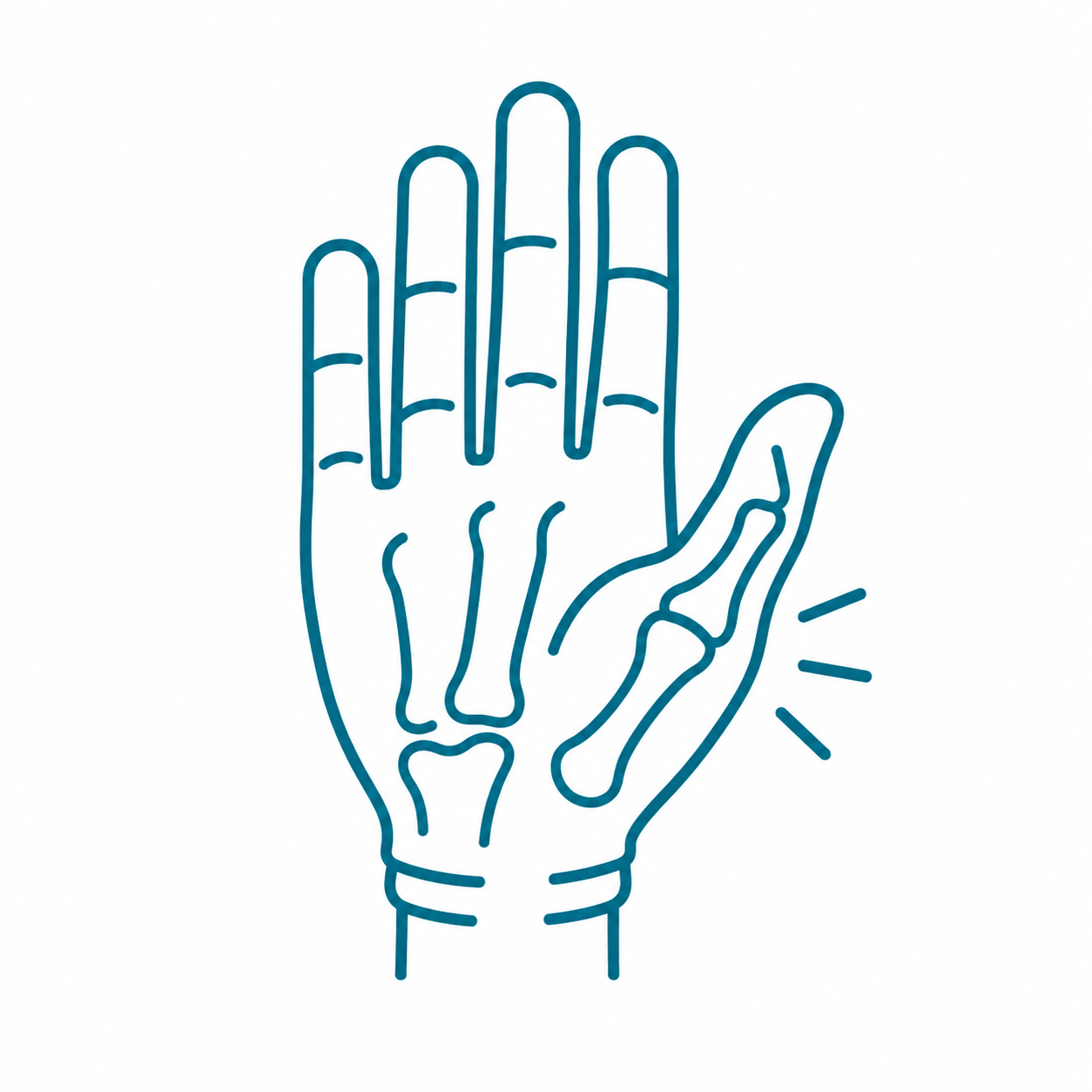
Thumb arthritis most commonly occurs when the cartilage at the base of the thumb gradually wears away over time. This joint, known as the carpometacarpal (CMC) joint, plays an important role in pinching, gripping, and everyday hand function. As arthritis progresses, patients may notice pain with opening jars, turning keys, gripping objects, or other activities that place stress on the thumb. Previous injuries, family history, and certain patterns of hand use may also contribute to the development of thumb arthritis.
-
Thumb arthritis is typically diagnosed through a combination of your symptoms, physical examination, and X-rays. Patients often report pain at the base of the thumb during gripping or pinching activities. During your visit, Dr. Gibson will evaluate the thumb joint, assess strength and motion, and review imaging studies to determine the severity of arthritis and discuss the treatment options that best fit your goals and lifestyle.
-
Most patients begin with non-surgical treatment. Options may include activity modification, splinting, anti-inflammatory medications, hand therapy, and corticosteroid injections. Many patients experience meaningful improvement with conservative care and are able to continue their normal activities without surgery. The goal is to reduce pain, improve function, and delay or avoid surgery whenever possible.
-
Surgery may be considered when thumb arthritis continues to cause significant pain or limits daily activities despite appropriate non-surgical treatment. The decision is based less on X-ray findings and more on how symptoms affect your quality of life.
Several surgical options are available, including traditional thumb arthritis procedures and thumb joint replacement. Dr. Gibson has received specialized international training in France on the TOUCH® Thumb CMC Joint Replacement system and is among the early surgeons in Arizona offering this FDA-approved technology. During your consultation, he will review all available options and help determine which treatment is best suited for your anatomy, activity level, and goals.
Arthritis & Joint Pain
-
A ganglion cyst is the most common lump found in the hand and wrist. These fluid-filled cysts typically arise from a nearby joint or tendon sheath and may vary in size over time. Some ganglion cysts cause pain, weakness, or discomfort with activity, while others are completely painless. Treatment depends on symptoms and may range from simple observation to aspiration or surgical removal.
-
Not always. Many lumps and bumps of the hand, wrist, and elbow are benign and may simply be monitored over time. Treatment is typically considered when a mass causes pain, limits function, affects nearby nerves, continues to grow, or becomes bothersome. The first step is determining exactly what the mass is and whether any treatment is necessary.
-
Most lumps and bumps in the hand and wrist are not dangerous and are often caused by common conditions such as ganglion cysts, tendon sheath cysts, or benign soft tissue growths. However, any new mass, rapidly growing lump, persistent swelling, or unexplained change should be evaluated. A careful examination, and occasionally imaging such as ultrasound or MRI, can help determine the cause and whether treatment is recommended.
Masses & Cysts
-
Seeking a second opinion is a personal decision, and many patients find it helpful when considering surgery or a major treatment decision. A second opinion can provide additional perspective, confirm a diagnosis, or help patients better understand their treatment options. Dr. Gibson welcomes patients seeking a second opinion and believes informed patients make the best decisions about their care.
-
Absolutely. Bringing prior X-rays, MRI studies, operative reports, therapy records, or other medical information can be extremely helpful. Reviewing previous evaluations and treatments often provides valuable insight and may prevent unnecessary testing. If additional imaging or studies are needed, those recommendations can be discussed during your visit.
-
During your consultation, Dr. Gibson will take time to understand your symptoms, review any prior imaging or treatments, perform a focused examination, and discuss your diagnosis and treatment options. The goal is to answer your questions, explain the available options, and develop a treatment plan that aligns with your goals and lifestyle. Whether you are seeking a second opinion, exploring alternatives to surgery, or considering treatment elsewhere, you can expect an honest and thoughtful discussion focused on helping you make the best decision for your care.
Second Opinion