

Carpal Tunnel Syndrome Treatment in Northern Arizona
Carpal tunnel syndrome occurs when the median nerve becomes compressed as it passes through the wrist. Peter Gibson, MD provides specialized evaluation and treatment for carpal tunnel syndrome, including ultrasound-guided in-office release and endoscopic carpal tunnel release for appropriate patients throughout Northern Arizona.

What Is Carpal Tunnel Syndrome?
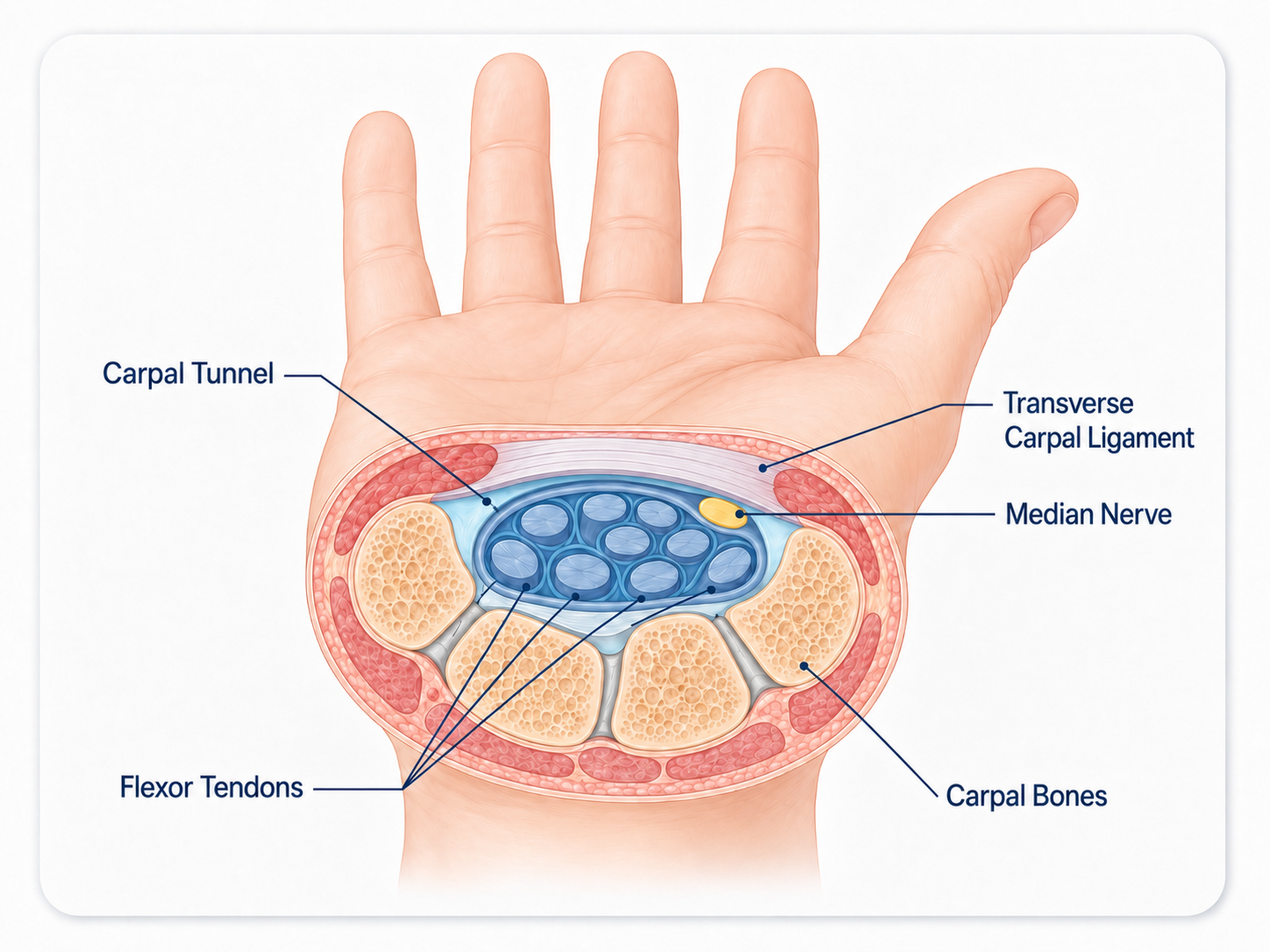
The carpal tunnel is a narrow passageway formed by the wrist bones and a strong band of tissue called the transverse carpal ligament. The median nerve and the tendons that bend the fingers pass through this space.
When pressure increases inside the tunnel, the median nerve may become irritated or compressed. This can cause numbness, tingling, pain, weakness, and difficulty using the hand.
Common Symptoms
→ Numbness & Tingling
Often in the thumb, index and middle finger.
→ Night Symptoms
May wake you up or worsen while sleeping
→ Hand Weakness
Difficulty gripping, opening jars, or performing fine motor tasks
→ Dropping Object
Loss of control or clumsiness in hand(s)

How is it Diagnosed?
→ Physical Exam
Specialized test help determine if problem is localized to hand, and wrist
→Testing When Needed
EMG/NCS- Nerve testing can be performed to determine severity of nerve damange
→ Corticosteroid Injection
Injection can help diagnose carpal tunnel and temporary alleviate discomfort
When Is Carpal Tunnel Release Considered?
Surgery may be recommended when:
Symptoms continue despite bracing or other treatment
Numbness is becoming constantSymptoms regularly interrupt sleep
Hand weakness or clumsiness is developing
Objects are frequently being dropped
Testing shows significant nerve compression
There is visible muscle loss at the base of the thumb
Long-standing or severe compression can cause permanent loss of sensation or strength. Earlier evaluation is particularly important when weakness, constant numbness, or muscle loss is present.
→ Wrist Splinting
A brace keeps the wrist in a neutral position while sleeping and may reduce nighttime pressure on the median nerve.
Nonsurgical Treatment
→Activity Modification
Changing positions or activities that repeatedly aggravate the hand may help control symptoms.
→ Cortisone Injection
Injections reduce inflammation and may provide temporary relief. It can also be useful when the diagnosis is uncertain. However, injections generally do not provide lasting improvement for carpal tunnel.
These treatments may improve symptoms, but they do not permanently create room for the nerve.
When Is Carpal Tunnel Release Considered?
Surgery may be recommended when:
Symptoms continue despite bracing or other treatment
Numbness is becoming constantSymptoms regularly interrupt sleep
Hand weakness or clumsiness is developing
Objects are frequently being dropped
Testing shows significant nerve compression
There is visible muscle loss at the base of the thumb
Long-standing or severe compression can cause permanent loss of sensation or strength. Earlier evaluation is particularly important when weakness, constant numbness, or muscle loss is present.
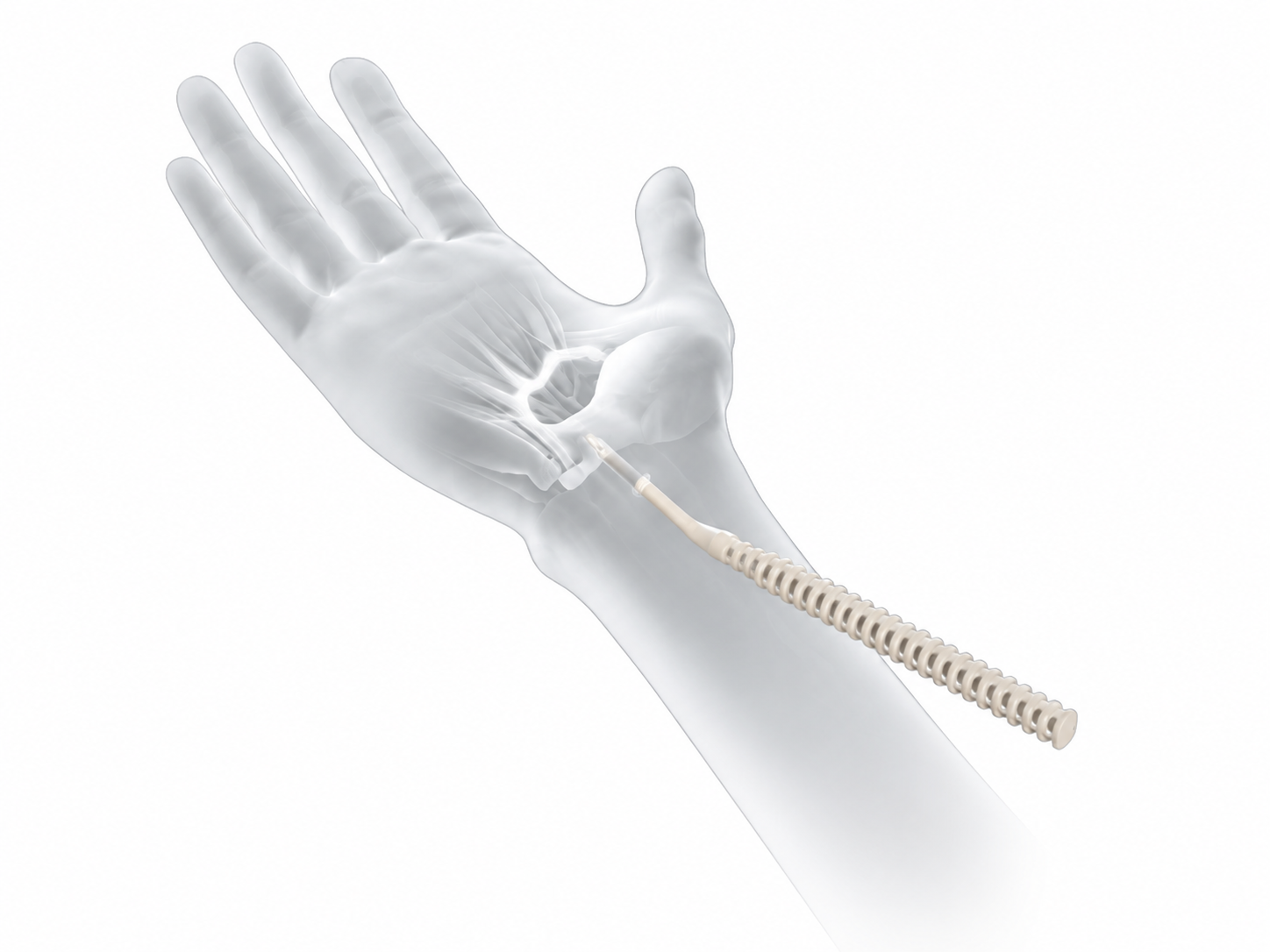
Surgical Options
→ Ultrasound-guided
Office-based and minimally invasive procedure using ultrasound for precision and safety. Helping avoid anesthesia and assisting in a quick recovery
→Endoscopic Camera Assisted
Surgical option provided under general anesthesia using endoscopy to visualize ligament release
→ Traditional (Mini-Open)
Traditional method with small incision in palm. Performed under local anesthesia
Three reliable options, helping match the best option to each individual patients needs and goals.